Queens HVAC FAQs:
- Heating, Cooling & Electric Solutions
Repair Costs, Emergencies, Maintenance and Technician Qualifications
Queens properties use a wide mix of comfort systems: central air conditioning, ductless mini-splits, PTAC units, furnaces, boilers, thermostats, and light commercial HVAC equipment. The right answer to an HVAC question often depends on the building layout, equipment type, system age, access, symptoms, and urgency.
This Queens HVAC FAQ guide gives homeowners, apartment residents, co-op and condo owners, landlords, property managers, and small business owners clear answers about repair costs, emergency service, common AC problems, maintenance timing, and technician qualifications. It is designed to help you understand the next practical step before you book service.
Quick Answer
HVAC pricing and repair decisions should start with a diagnosis, not a guess. Urgent service is appropriate when comfort loss, water, electrical symptoms, or extreme weather create immediate risk, while gas odors, carbon monoxide alarms, smoke, or fire require emergency services or the utility before an HVAC appointment.
For service-specific help, visit the Queens HVAC service hub, review AC repair in Queens, or call (917) 599-1006.
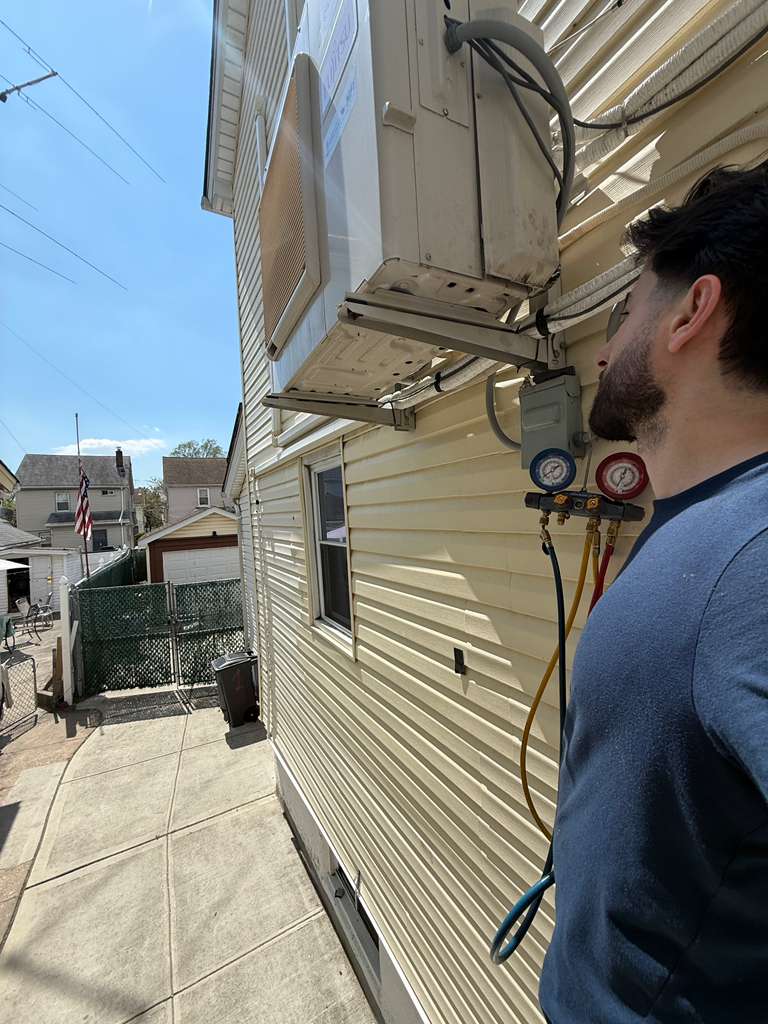
Book Appointment Today!
"*" indicates required fields
AC Repair Costs in Queens
The cost of AC repair in Queens is affected by the equipment, the failed component, access, parts, labor, and whether the visit is routine or urgent. A central AC system, ductless mini-split, PTAC unit, and light commercial system can show the same symptom for very different reasons, which is why an inspection normally comes before a final repair price.
| Cost Factor | Why It Changes the Repair |
| System type | Central AC, ductless, PTAC, furnaces, boilers, and commercial equipment use different parts and service procedures. |
| Cause of the symptom | Warm air may come from airflow, controls, refrigerant, coils, a motor, the condenser, or the compressor. |
| Access and property type | Roof, attic, basement, apartment, co-op, storefront, and compact mechanical-room access can change labor and scheduling. |
| Parts and equipment age | Older or uncommon equipment can require harder-to-source parts and a broader repair-versus-replacement discussion. |
| Urgency | Same-day or after-hours requests may involve different dispatch and scheduling conditions. |
How much does AC repair usually cost in Queens?
There is no accurate one-price answer before the system is inspected. The total depends on the equipment type, failed part, labor, access, parts availability, and urgency. A thermostat or drainage correction is different from a motor, control board, refrigerant leak, coil, or compressor problem. A diagnostic visit should identify the cause and separate the approved repair price from any replacement option.
What does an HVAC diagnostic fee cover?
A diagnostic fee covers the technician’s time to evaluate the symptoms, inspect the relevant system components, test operation, and explain the findings. Heating, Cooling & Electric Solutions currently lists typical diagnostic fees of $179 to $250 depending on the issue, location, and urgency. The fee should be confirmed before dispatch, and it may be credited toward an approved repair where applicable.
Why can two AC systems with the same symptom have different repair costs?
The visible symptom is not always the actual failure. An AC that runs without cooling may have a clogged filter, dirty coil, low airflow, thermostat problem, electrical fault, refrigerant issue, failing motor, outdoor-unit problem, or compressor concern. Equipment location and building access also matter. Diagnosis prevents a price from being based only on the symptom.
When does AC replacement become more practical than another repair?
Replacement becomes more relevant when the equipment is older, major components are failing, repairs are becoming frequent, parts are difficult to source, energy use is rising, or the system no longer controls temperature and humidity well. Repair may still be the better choice when the problem is isolated, parts are available, and the system performs well overall. Compare both paths using the system’s condition and long-term value. Review AC installation in Queens when replacement planning is the next step.
Core Values
We believe in honest and transparent communication with our clients. Our commitment to integrity ensures that we provide accurate assessments and fair pricing.
We are dedicated to delivering superior quality in every job we undertake. Our focus on excellence drives us to use the best materials and techniques to ensure lasting results.
Our customers are at the heart of everything we do. We listen to their needs and work diligently to exceed their expectations, ensuring their complete satisfaction.
We embrace the latest technologies and industry advancements to enhance our services. Our commitment to innovation allows us to provide cutting-edge solutions and maintain a competitive edge in the HVAC fields.
Four things we promise — and you can hold us to.
Repair first, replace only when it's truly smarter.
If your system can be fixed at a fair cost, we fix it. We'll only recommend replacement when repair stops making financial sense — and we'll show you exactly why.
You approve the price before any work starts.
No repair begins, no extra labor appears, and no final replacement quote is locked in without your okay. You're always in control of what you're spending.
Plain English, every time.
We tell you what's actually wrong, what's urgent, what can wait, and what it'll cost — in language that makes sense, not technician jargon. Then the decision is yours.
One team for the whole comfort system.
Heating, cooling, boilers, and hot water often overlap in older Queens homes. We handle all of it, so you're not stuck refereeing between three contractors who blame each other.
Emergency HVAC Services in Queens
An HVAC problem becomes urgent when it creates a fast-moving comfort, water, electrical, or property concern. Queens apartments, older homes, upper-floor rooms, tenant-occupied properties, and customer-facing businesses can overheat or lose heat quickly, so the first step is deciding whether you need an HVAC technician, the utility, or emergency services.
Safety First
Leave the area and call 911 or the utility if you smell gas, suspect a gas leak, receive a carbon monoxide alarm, see smoke or fire, or find a downed power line. Do not wait for a routine HVAC appointment in those situations.
What counts as an HVAC emergency in Queens?
Urgent HVAC situations can include complete loss of cooling during extreme heat, no heat during dangerous cold, active water leaking near electrical components or finished surfaces, repeated breaker trips, a hot or electrical odor, a failed PTAC in an occupied apartment, or a business losing essential temperature control. The level of urgency depends on the people in the space, weather, property conditions, and system symptoms.
What should I do before emergency HVAC help arrives?
Turn the equipment off if there is active water near wiring, visible ice spreading, smoke, a burning odor, or a breaker that keeps tripping. Move belongings away from a water leak when it is safe. Do not open electrical panels, bypass a safety switch, handle refrigerant components, or keep resetting a breaker. Write down the system type, error code, sounds, odors, leak location, and when the problem started.
Does Heating, Cooling & Electric Solutions provide same-day or emergency HVAC service in Queens?
Urgent or same-day service may be available depending on the schedule, Queens location, system type, building access, and problem. The fastest way to check is to call (917) 599-1006 and describe the property, equipment, symptoms, and any water, electrical, heating, or cooling concern. Availability should be confirmed when you call rather than assumed.
When should I call 911 or the utility instead of an HVAC contractor?
Call 911 or the appropriate utility first when there is a gas odor, suspected gas leak, carbon monoxide alarm, smoke, fire, sparking, or a downed power line. Leave the affected area before calling when gas or carbon monoxide is suspected. An HVAC contractor can address equipment after the immediate hazard has been made safe and the responsible emergency authority says it is appropriate to return.
For non-life-threatening urgent heating or cooling problems, use the Queens HVAC service page or book an appointment.
Common AC Problems in Queens Homes
The same symptom can have several causes. Queens properties may use central AC, ductless mini-splits, PTAC units, or a combination of equipment, and older layouts can make airflow, drainage, humidity, and room-to-room comfort problems more noticeable.
Why is my AC running but not cooling the home?
An air conditioner can run without cooling because of restricted airflow, a heavily clogged filter, dirty coils, thermostat or control problems, low refrigerant, a refrigerant leak, outdoor-condenser trouble, a weak fan or motor, or a compressor-related issue. Check the thermostat and filter only when it is safe. If the indoor fan runs but the outdoor unit does not, or the space keeps heating up, schedule AC repair in Queens.
Why is my air conditioner leaking water indoors?
Common causes include a clogged condensate drain, frozen coil, restricted airflow, dirty filter, damaged drain pan, failed condensate pump, poor PTAC pitch, or a blocked ductless drain line. Turn the system off if water is reaching electrical components or spreading into ceilings, walls, floors, or another unit. Water location and system type help the technician trace the source.
Why does my AC keep turning on and off every few minutes?
Frequent starts and stops are called short cycling. Possible causes include a dirty filter, blocked airflow, frozen coil, thermostat placement or wiring, drainage safety switch, electrical control problem, overheating outdoor unit, low refrigerant, or equipment that is incorrectly sized for the space. Short cycling increases wear and should be diagnosed if it continues after basic thermostat and filter checks.
Why are some rooms hot, humid, or receiving weak airflow?
Uneven comfort can come from blocked returns, closed vents, dirty filters, duct restrictions, weak blower performance, hot upper floors, sun exposure, poor insulation, undersized returns, short cycling, or a system that does not match the property layout. Ductless zoning, airflow correction, thermostat changes, duct work, maintenance, repair, or replacement may be considered only after the cause is identified. Review air conditioning services in Queens for the available service paths.
HVAC Maintenance Schedules
Maintenance timing should follow the equipment manufacturer, system condition, property use, and service history. A useful baseline is a professional cooling check before summer and a heating check before winter, with filters reviewed more frequently during heavy-use months.
System or Task | Practical Timing | What to Watch |
Central AC or heat pump | Professional pre-season check before cooling season; follow manufacturer guidance. | Filters, coils, condensate drainage, thermostat, electrical connections, blower, refrigerant performance. |
Furnace or boiler | Professional check before the heating season; more often when required by the manufacturer, building, or equipment condition. | Startup, controls, burners or ignition, venting, circulation, unusual noise, leaks, uneven heat. |
Ductless mini-split | Check or clean filters during heavy use and schedule professional service based on condition and manufacturer guidance. | Indoor-head filters, drain line, coil condition, outdoor unit, controls, error codes. |
PTAC unit | Review filters and drainage during heavy use; inspect before peak summer demand. | Sleeve or window pitch, water drainage, fan, coil, controls, noise, air leakage. |
Light commercial equipment | Use a documented schedule based on runtime, occupancy, system type, and manufacturer requirements. | Filters, controls, drainage, operating hours, tenant or customer impact, recurring trouble areas. |
How often should HVAC maintenance be scheduled in Queens?
Most properties benefit from at least one professional pre-season check for each system they rely on: cooling before summer and heating before winter. A combined heating-and-cooling system may justify two seasonal visits. Older equipment, heavy commercial use, recurring drainage problems, pets, renovations, or high dust can justify a more frequent schedule based on the technician’s findings and the manufacturer instructions.
How often should I check or change the HVAC filter?
Check the filter about once a month during heavy cooling or heating use. Replace or clean it according to the filter type, equipment instructions, visible condition, airflow, and household conditions. A filter can need attention sooner when there are pets, dust, renovation debris, smoke, high occupancy, or long system runtime. Do not install a higher-resistance filter without confirming that the equipment can handle it.
Do ductless mini-splits and PTAC units need maintenance too?
Yes. Ductless and PTAC systems can develop dirty filters, blocked drains, coil buildup, fan issues, control errors, water leaks, and reduced airflow. Indoor filters should be checked during heavy use, and drainage should be reviewed if water appears. Professional service should follow the equipment condition and manufacturer guidance, especially before peak summer operation.
How do I know whether the system needs maintenance or an actual repair?
Maintenance is appropriate when the system is generally working and needs inspection, cleaning, filter service, drainage review, or performance checks. Repair is more likely when the equipment will not start, cannot reach temperature, leaks water, trips a breaker, makes a new mechanical or electrical noise, shows an error code, or repeatedly stops. A tune-up should not be used to avoid diagnosing an active failure. Learn more about HVAC repair, installation, and maintenance.
HVAC Technician Certifications and Licensing
HVAC work in Queens can involve several different credentials rather than one universal credential for every task. Refrigerant handling, mechanical installation, residential improvement work, electrical changes, and permit-related work may involve different certifications, licenses, registrations, or licensed trades.
What certifications should an HVAC technician have?
The correct credential depends on the work. Technicians who could open or affect a refrigerant circuit should have the appropriate EPA Section 608 certification. Installation, electrical, oil-burning, and permit-related work may require additional licensed trades, registrations, or permits in New York City. Ask which individual or company credential applies to the exact scope instead of relying only on a general statement that someone is certified.
What is EPA Section 608 certification?
EPA Section 608 certification is required for technicians who maintain, service, repair, or dispose of stationary air-conditioning or refrigeration equipment in a way that could release refrigerant. Certification types are tied to the equipment a technician works on. It is an individual technician credential, so customers can ask whether the person handling the refrigerant circuit has the appropriate certification.
Does HVAC work in Queens require a license or permit?
Requirements depend on the project. Residential improvement work may require a New York City Home Improvement Contractor license, while many mechanical installations or alterations can require Department of Buildings filings or permits. Electrical work may require a licensed master or special electrician, and other work outside heating and cooling equipment may require another qualified trade. Small repairs and exempt work can follow different rules, so the scope should be checked before work begins.
How can I verify an HVAC contractor’s qualifications before booking?
Ask for the company name, insurance information, applicable license or registration number, the technician credential needed for the task, and whether a permit is required. Verify contractor or skilled-trade information through the relevant New York City agency when the project involves regulated work. Also ask who will pull any required permit, who will perform any electrical work, and how the company documents the diagnosis, approved price, and completed testing. Review About Heating, Cooling & Electric Solutions for the company’s service standards.
Book An Appointment Now!
"*" indicates required fields
Get a Clear Answer Before You Approve HVAC Work
A good HVAC visit should leave you understanding the problem, the urgent items, the optional items, and the available repair or replacement paths. Heating, Cooling & Electric Solutions helps Queens homeowners, apartment residents, landlords, property managers, and local businesses start with a diagnosis and review practical next steps before approved work begins.
Request HVAC Help in Queens
Call (917) 599-1006 to describe the system, property type, symptoms, and Queens location, or use the online appointment form. Same-day or urgent availability depends on scheduling, access, system type, and the problem.
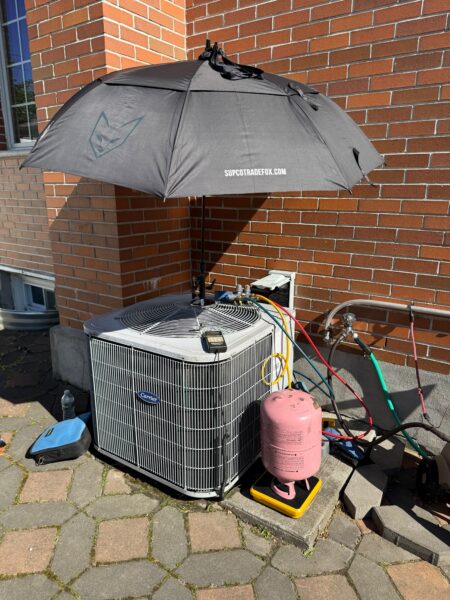
How a visit actually works: the No-Surprise Diagnostic
Think of it like a check-engine light for your home. You don't need to know what's wrong — you need someone honest to find out and explain it before it turns into a bigger bill.
You tell us the symptom.
No heat, AC running but not cooling, uneven rooms, a boiler acting up, a strange noise, a spiking bill. Whatever you're seeing, that's where we start.
We inspect the whole comfort chain.
Not just the obvious part. We check the system, airflow, controls, thermostat, electrical, refrigerant or coil issues, and boiler/radiator balance — because a quick patch on the wrong cause is why problems come back.
We explain it in plain English.
What's wrong, what's urgent, what's optional, and what it costs. No jargon, no scare tactics.
You get honest options.
Repair-first when it makes sense, replacement guidance only when it's genuinely the smarter long-term call. You choose.
We do the approved work, then confirm it's fixed.
Nothing happens until you say yes. When we're done, we make sure the problem is actually solved and tell you what to watch for next.